Choose your home country, carrier and destination, then enter your trip details and the eSIM price you are considering.
Cost comparison
Complete formula
Recommended next step
Break-even point:
Important assumptions and carrier-plan limits
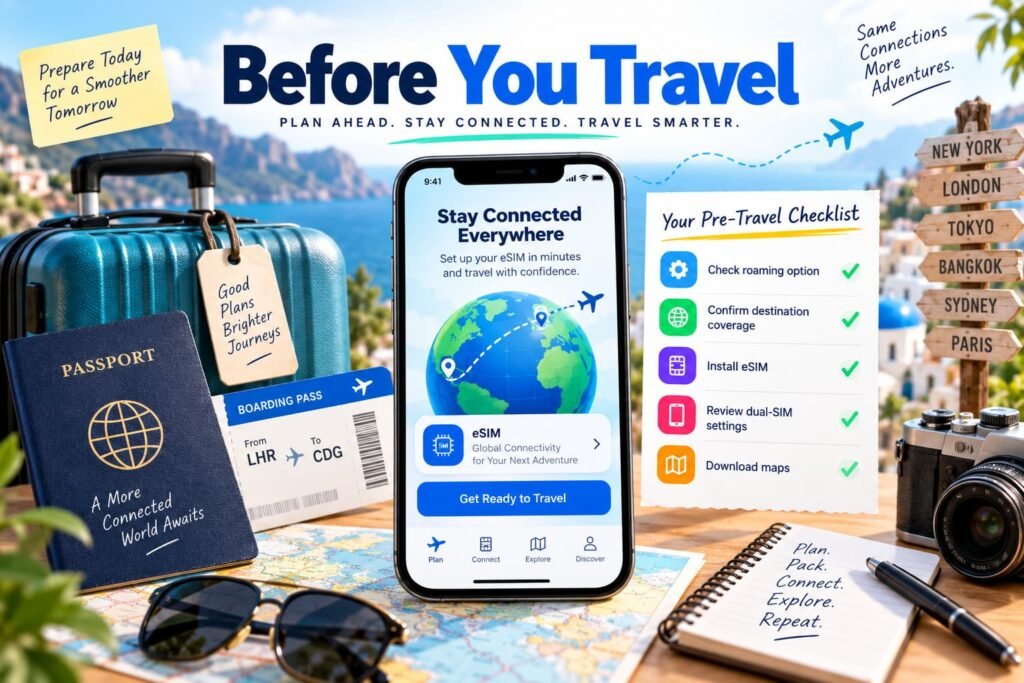
Before you travel
- Verify the carrier option and destination eligibility again before departure.
- Confirm eSIM validity, data allowance, hotspot rules and supported networks.
- Install the eSIM before departure when the provider allows it.
- Set the intended line for mobile data and prevent accidental roaming on the home line.
- Keep access to your home number if you still need calls, SMS or two-factor codes.
Carrier rates last verified: September 15, 2026
Carrier roaming rates, travel passes, included benefits and destination eligibility can change. Estimates are based on the selected options and current published carrier information, but your actual wireless bill may vary by plan, account type, usage and carrier updates. Confirm current roaming terms with your carrier before travelling.
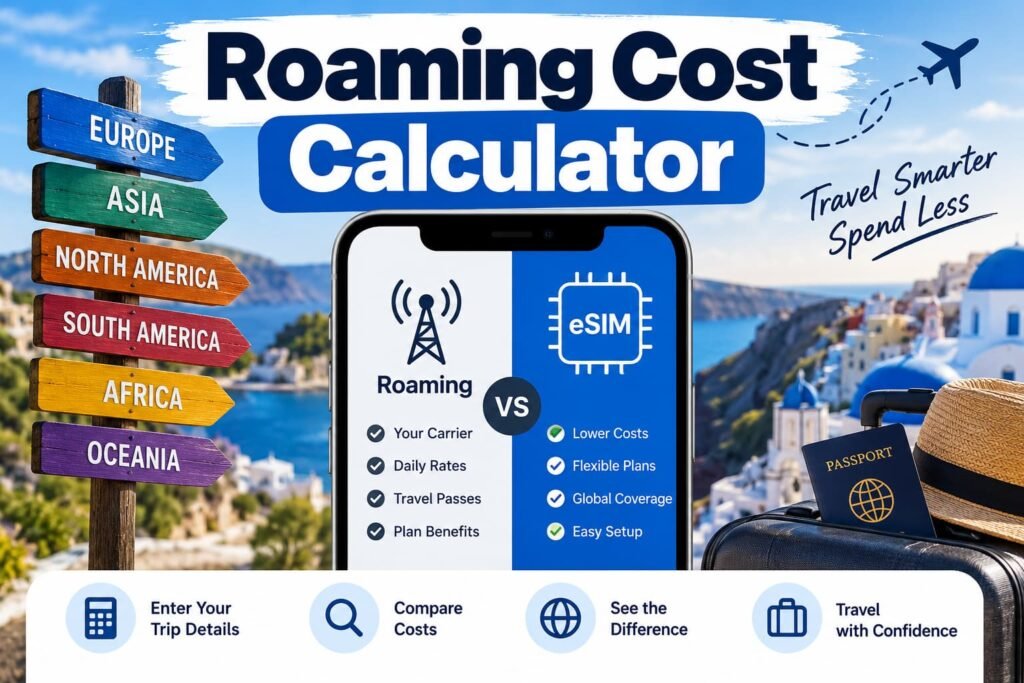
Understanding Your Roaming Cost Calculator Results
This roaming cost calculator estimates more than the length of your trip. Carrier roaming can be charged by the day, included with a wireless plan, sold as a fixed-duration travel pass or affected by billing-period limits and multi-line rules.
That is why two travellers visiting the same destination for the same number of days can receive very different roaming totals.
The comparison above is most useful when the selected carrier option matches what is actually available on your line and the eSIM side uses the price you would really pay at checkout. It can be used for trips to Europe, Asia and other international destinations, while enhanced carrier support is concentrated in the United States, Canada and Mexico and manual pricing can be used where a verified preset is not available. The sections below explain the billing rules that can change the result and the practical differences worth considering before choosing between carrier roaming and a travel eSIM.
How the International Roaming Cost Calculator Works
Start with the roaming option that actually applies to your line. Depending on the carrier and plan, that could be a daily roaming feature, a fixed-duration travel pass, included international roaming or a manually entered rate.
Trip length is only one part of the calculation. Some daily roaming products charge after qualifying use begins, so a 10-day vacation does not necessarily mean 10 daily fees. Other options are purchased for a set number of days regardless of how often the phone is used.
Multiple lines can change the comparison again. A couple or family may face roaming charges on each active line, while their eSIM setup could involve one plan per traveller, several plans during a longer trip or a different arrangement entirely.
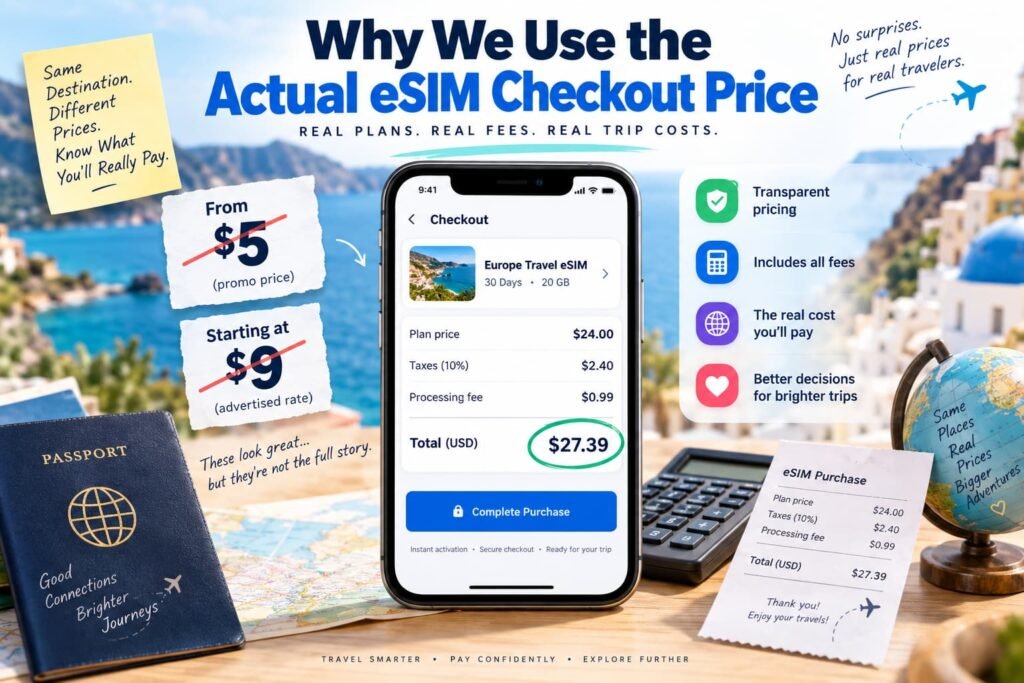
For the eSIM side, I prefer using the actual checkout price of the plan you are considering rather than an average advertised cost. Starting prices and promotions change too often, and they may have little to do with the data plan you actually need for your trip.
Why Trip Length and Roaming-Use Days Are Not Always the Same
Daily roaming products are often triggered by mobile activity rather than simply by being outside your home country.
For example, AT&T says its International Day Pass starts a 24-hour charge period when qualifying talk, text or data use occurs. AT&T also applies different rules to additional lines and currently limits land or air International Day Pass charges to 10 daily fees per line in a bill period. (att.com)
Verizon uses similar usage-based logic for TravelPass: a session begins after qualifying phone use abroad rather than automatically charging for every day of the vacation. Background data can still trigger usage, which is why simply planning not to open an app is not the same as keeping the home line from roaming. (verizon.com)
A traveller spending two weeks overseas might therefore have 14 trip days but only a handful of intended roaming-use days. Someone who leaves the home SIM active for calls, texts and background data throughout the trip could produce a very different total.
Fixed passes work differently. Rogers now offers travel passes covering set periods alongside daily roaming options, while Bell also offers fixed-duration Travel Passes that take priority over its regular Roam Better daily feature while an eligible pass is active. (rogers.com)
Pick the roaming option that most closely matches what is attached to your account rather than assuming every carrier uses the same daily-fee model.
When Carrier Roaming May Be Worth Paying For
A travel eSIM can reduce connectivity costs on many trips, but the lowest price does not automatically make it the better choice.
Carrier roaming can be attractive when international service is already included with your plan. In that situation, the incremental cost may be little or nothing, which changes the comparison completely.
Convenience also has value. Staying on the home carrier’s roaming service usually means keeping the same number for calls and texts, using the existing plan allowance where permitted and avoiding a separate eSIM installation. For a one- or two-day trip, paying a modest premium may be reasonable if simplicity matters more than maximizing savings.
Business travellers have another consideration. A company-paid line, a requirement to remain reachable on the regular number or a need for conventional voice and SMS service can make roaming easier to justify even when an eSIM’s data price is lower.
Before ruling roaming out, check whether your current plan already includes the destination. Some U.S. plans include international benefits or Canada/Mexico usage that would make a separate eSIM unnecessary for certain trips.
When a Travel eSIM May Cost Less
Longer trips tend to expose the difference between recurring daily roaming fees and a prepaid eSIM more clearly.
Suppose a carrier charges on each qualifying use day and the phone will be used throughout a two-week vacation. Even without quoting a specific carrier rate, repeated daily charges can accumulate quickly. A prepaid eSIM purchased once for the same period may cost considerably less.
Families and groups should compare the entire travelling party rather than one phone. Four lines using paid roaming can produce a very different result from four individual eSIM plans, particularly where the carrier charges separately for each line.
International itineraries also deserve closer attention. A regional eSIM covering France, Italy and Spain, or a broader plan for Japan, South Korea and Thailand, may keep several destinations under one data plan while carrier roaming rules, daily prices or destination eligibility can vary as the traveller crosses borders.
Heavy data use does not automatically favour an eSIM, though. Compare the plan’s data allowance, high-speed limit, hotspot policy and fair-use terms before choosing solely on price.
Why We Use the Actual eSIM Checkout Price
Published eSIM prices change frequently. Promotions expire, plan sizes differ, regional products cover different countries, and taxes or currency conversion can affect what appears at checkout.
Using a generic statement such as “an international eSIM costs $20” would make the result look precise without actually being precise.
I would rather compare roaming with the price you are genuinely about to pay. If one provider offers 10 GB for one amount and another offers 20 GB for a different amount, you can rerun the calculation using either plan instead of relying on an average that represents neither.
The same principle applies to so-called unlimited plans. High-speed data policies, hotspot allowances and fair-use restrictions can differ, so the cheapest headline price does not tell the entire story.
Price Is Only Part of the Roaming vs eSIM Decision
Savings matter, but connectivity still has to work for the way you travel.
Keeping your regular number: Carrier roaming normally keeps your existing voice and text service operating abroad. A data-only eSIM can still be used alongside a home SIM on many dual-SIM phones, but the settings must be configured carefully to avoid unwanted roaming charges.
Mobile data allowance: Compare how much high-speed data is included rather than focusing only on whether a plan says “unlimited.” Speed reductions after a threshold can matter for navigation, video calls, cloud uploads or streaming.
Hotspot use: Travellers working from a laptop or sharing data with family should confirm whether tethering is allowed and whether a separate hotspot limit applies.
Network access: Carrier roaming and travel eSIMs may connect to different local networks. Coverage can therefore change by destination, region and even route within the same country.
Voice and SMS: Many travel eSIMs are primarily data products. Anyone who needs conventional calls or SMS from the regular number should account for that before turning the home line off.
Setup: Roaming normally requires little configuration beyond account eligibility and device settings. A travel eSIM adds an installation step but can provide much lower data costs in the right circumstances.
Once the price difference gets small, these practical differences can matter more than a few dollars either way.
Multiple Lines Can Change the Result Quickly
International roaming for a family should be calculated at the account level rather than by looking at the first phone.
AT&T, for example, currently applies one International Day Pass price to the first line used on a qualifying day and a lower daily amount to additional lines on the same account and calendar day. That makes a simple “daily fee × number of travellers” estimate inaccurate for that specific product. (att.com)
Other carriers and plans can use different rules. Some charge each line independently, some include destinations in particular plans, and fixed travel passes may need to be purchased per line.
The eSIM side deserves the same care. One traveller might need one plan for the entire trip, while another could require more than one purchase because of data consumption, validity periods or a multi-country itinerary.
Compare what each person will actually use rather than assuming everyone on the trip has identical needs.
Included Roaming and Travel Passes Can Change the Answer
An eSIM is not automatically cheaper when the home plan already includes international usage.
Certain U.S. plans include Canada and Mexico or broader international benefits. Verizon, for example, says some of its plans include Canada and Mexico usage, while its Unlimited Ultimate plan includes international service in a much wider group of destinations. (verizon.com)
Travellers with mobile plans from EU or EEA countries may already have roaming included across eligible European destinations, subject to their carrier’s fair-use policy and plan terms.
Fixed-duration carrier passes create another middle ground between included service and daily roaming. Rogers currently offers passes from short trips through longer stays, and Bell’s travel options include several destination-specific durations. (rogers.com)
A fixed pass can sometimes cost less than paying a daily charge throughout the same trip while preserving the convenience of the regular phone number and home plan.
Use the specific roaming arrangement you expect to have on your line whenever the calculator supports it. Where a carrier or plan is not built in, manual pricing lets you compare the current amount instead of forcing the calculator to guess.
How We Verify International Roaming Rates
Carrier pricing changes, and the details behind a headline rate can matter just as much as the rate itself.
For supported roaming options, eSIMTravelGuide.com checks first-party carrier information such as official pricing pages, destination eligibility, charge triggers, fixed-pass validity, included-roaming benefits, billing limits and rules for additional lines where applicable.
I also do not assume that one carrier’s roaming setup works the same way as another. AT&T currently uses daily International Day Pass periods with a bill-period cap for qualifying land and air use, Verizon TravelPass charges based on qualifying use days, and Canadian carriers such as Rogers and Bell now offer fixed-duration passes alongside other roaming options. (att.com)
Even with verified source data, check the current terms attached to your own account before departure. Grandfathered plans, business accounts, promotions and recently changed features may not match the standard consumer option.
Before You Travel
A final review can prevent a cheap connectivity plan from becoming an expensive roaming bill.
Confirm that your carrier’s roaming option covers the destination and check whether international service is already included with your plan. Compare the eSIM using its real checkout price, data allowance, validity period, high-speed limits and hotspot rules rather than price alone.
Dual-SIM users should also decide how the home line will behave after the travel eSIM becomes active. Background app activity can trigger roaming on some carrier products, so setting the eSIM as the mobile-data line is not always enough by itself. Rogers specifically warns that background services can create roaming usage and advises customers using a third-party travel eSIM to configure the device carefully to keep the Rogers line from roaming. (rogers.com)
Before purchasing, make sure the phone supports eSIM and is not restricted in a way that prevents another carrier profile from being installed. Installing the travel plan before departure also gives you time to fix setup problems while you still have dependable internet access.
Frequently Asked Questions About International Roaming Costs and Travel eSIMs
How accurate is an international roaming cost calculator?
A roaming calculator can provide a strong estimate when the carrier option, destination, chargeable days, number of lines and any included roaming benefits match the traveller’s actual plan. Accuracy falls when the calculation relies on a generic daily rate or assumes that every day abroad produces a charge.
Carrier rules are the biggest reason totals can differ. Some services begin a charge period after qualifying talk, text or data use, while others use a fixed-duration pass. Billing-period caps, included roaming credits and additional-line pricing can further change the result.
Treat the estimate as a planning tool rather than a replacement for the carrier’s final bill. Before departure, compare the assumptions shown by the calculator with the current travel terms on your own wireless account.
What causes a daily roaming charge while travelling?
Daily roaming fees are commonly triggered after the home line uses an eligible roaming service abroad, but the exact trigger depends on the carrier. Data activity, making or answering calls, or sending certain text messages may start a charge period.
Background data is particularly easy to overlook. Email synchronization, cloud backups, app refresh and other services can transmit data even when the phone appears idle. Verizon notes that background apps can use data during TravelPass roaming, and Bell says its Roam Better fee can be triggered when data is sent or received. (verizon.com)
Travellers who intend to use only a separate eSIM for mobile data should configure the home line carefully rather than assuming that not opening an app is enough to prevent a roaming-use day.
What happens when international roaming is already included in my phone plan?
Included international roaming can reduce the incremental roaming cost to zero for an eligible destination, making a separate eSIM unnecessary from a price perspective.
Coverage still needs to be checked carefully. A plan may include Canada and Mexico but charge separately elsewhere, or it may include international data with limits that differ from domestic usage. Destination eligibility, high-speed data allowances and fair-use conditions can all affect whether the included service is sufficient for the trip.
Enter the included-roaming option where the calculator supports it. Afterwards, compare the non-price factors such as network coverage, hotspot availability, data limits and the convenience of keeping your regular number before purchasing another plan.
How does a fixed-duration carrier travel pass compare with daily roaming?
A fixed-duration pass charges for a defined travel period rather than adding a new fee for each qualifying use day. Depending on the carrier, passes may be available for several different durations and can use the data, talk and text allowance already attached to the home plan.
For travellers who expect to use their phone every day, the fixed price can be cheaper than repeated daily roaming charges. Someone planning to use the home line on only one or two days, however, may find that a daily option costs less.
Validity rules matter as well. Bell states that its Travel Pass takes priority over Roam Better while the pass is active and then reverts to the regular roaming arrangement after expiry. Rogers likewise offers fixed Travel Pass periods alongside daily roaming. (support.bell.ca)
How should I calculate roaming costs for multiple phone lines?
Calculate each line according to the carrier’s actual multi-line rules rather than multiplying the first-line price by the number of travellers.
AT&T is a good example: its current International Day Pass terms price the first qualifying line differently from additional lines used on the same account and calendar day. Other carriers may apply separate per-line fees, included benefits or pass requirements. (att.com)
Families should also calculate eSIM costs for the whole group. Compare the number of plans each traveller needs, expected data use and plan validity against the total roaming cost for every active home line. That produces a much more useful family-trip comparison than looking at one device in isolation.
Why does the calculator ask for the actual eSIM checkout price?
Real checkout pricing produces a more defensible comparison than an assumed “average eSIM cost.”
Travel eSIM pricing varies by provider, destination, regional coverage, data allowance, validity period and promotion. A plan advertised from a very low starting price may not be the product you need, while an unlimited plan may have a higher price but different high-speed or hotspot conditions.
Enter the amount you would genuinely pay for the plan you are considering. You can then rerun the calculation with another provider or data allowance and see how the eSIM vs roaming cost changes without depending on promotional averages.
Is a travel eSIM always cheaper than international roaming?
No. A travel eSIM can be substantially cheaper in some situations, particularly on longer trips or when several paid roaming days would otherwise accumulate, but there are important exceptions.
Roaming may cost nothing extra when the destination is included in the home plan. A fixed carrier travel pass can also narrow the difference, and a very short trip may not justify purchasing a separate data plan. Business travellers may value keeping their existing service enough to accept a higher cost.
Use the monetary result as one part of the decision. Data limits, local network access, voice and SMS needs, hotspot support, high-speed policies and setup convenience can matter just as much once the price difference becomes small.
How can I keep my regular phone number while using a travel eSIM?
Many modern dual-SIM phones can keep the home SIM or eSIM enabled for the regular number while using a separate travel eSIM for mobile data. That can allow incoming texts or other home-line functions to remain available while most internet traffic uses the travel plan.
Careful configuration is essential because leaving both lines enabled can expose the home line to roaming charges. Set the travel eSIM as the preferred mobile-data line, review data-switching settings and understand what your carrier considers charge-triggering activity. Calling, outgoing SMS or background data on the home line can activate paid roaming depending on the plan.
Anyone who needs the regular number for two-factor authentication, work calls or family contact should review both the phone settings and carrier roaming terms before departure. A dual-SIM setup can provide the best of both options, but only when the home line is prevented from creating unintended roaming usage.
Final Thoughts
The useful question is not simply whether an eSIM or carrier roaming is cheaper. It is what each option will cost for the way you will actually use your phone on this specific trip.
A three-day visit with included roaming can produce a completely different answer from a three-week vacation with several paid lines. Fixed travel passes, billing caps, days when the home line stays unused and the actual eSIM checkout price can all shift the result.
I would run the comparison using the most accurate carrier option available, then look past the final dollar amount. Coverage, high-speed data, hotspot access, voice and SMS needs, keeping the home number active and ease of setup can all change which option makes more sense.
For me, that is the point of the calculator: get the roaming cost as close as possible to your real trip, compare it with the eSIM you would actually buy, and then decide whether the savings are worth changing how you use your phone abroad.